

Key Takeaways
- Closing one eye to read is often an automatic habit your child may not notice.
- Blurry vision, eye teaming trouble, or a lazy eye can all play a role.
- A 20/20 result checks clarity, but eye teaming may need a separate, closer look.
- Squinting indoors or up close is worth more attention than squinting in bright sun.
- A functional vision evaluation can guide the next steps for your child.
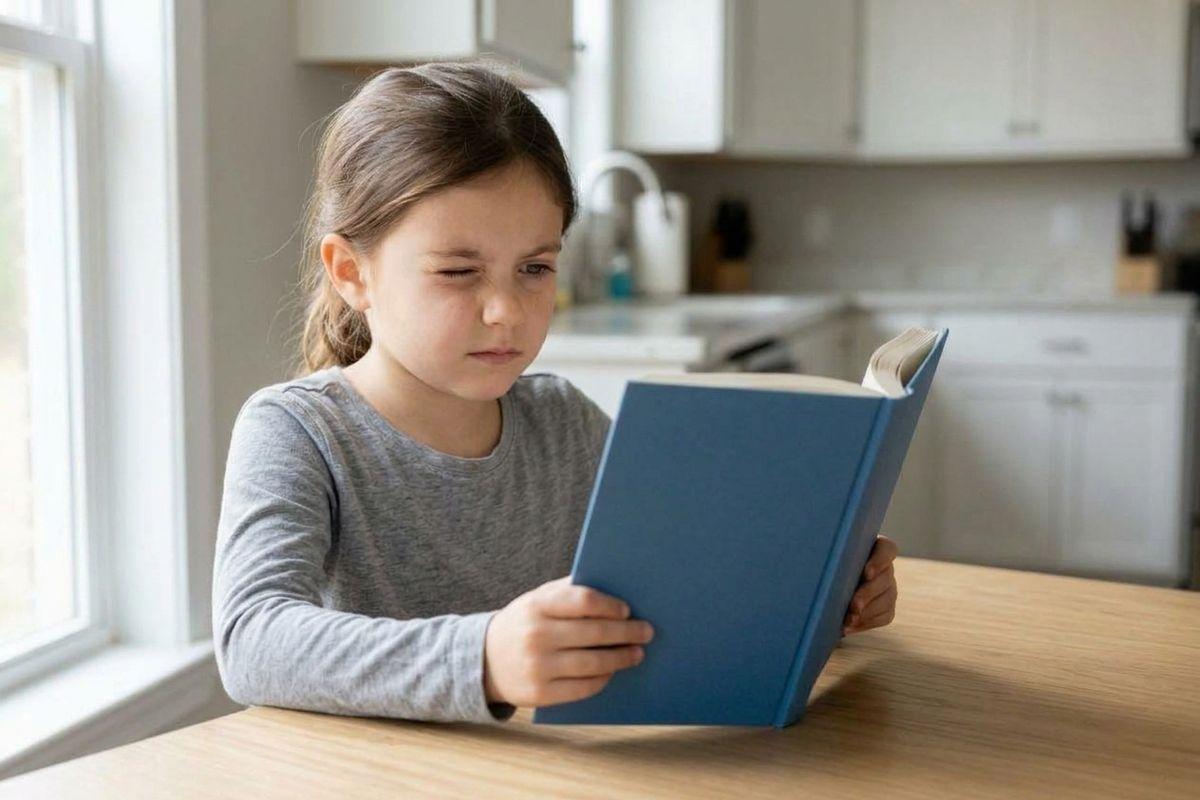
You glance over at homework time and see your child reading with one hand pressed over an eye. Or maybe one eye stays shut while the other follows the words across the page. Your child may close one eye when reading because of blurry vision, trouble getting both eyes to work as a team, a lazy eye, or an eye turn. A functional vision evaluation at the practice can help determine which option fits your child and whether vision therapy makes sense as a next step.
What Does It Mean When Your Child Shuts One Eye to Read?
For many kids, shutting one eye is automatic. They don’t decide to do it, and they often can’t tell you why.
Kids assume everyone sees the way they do. If the page has always looked a certain way, your child has nothing to compare it to. That’s why parents and teachers often spot the habit first.
Signs to Watch for at Home
You can learn a lot just by watching homework time. Here are a few signs to note:
- Your child shuts or covers one eye during homework.
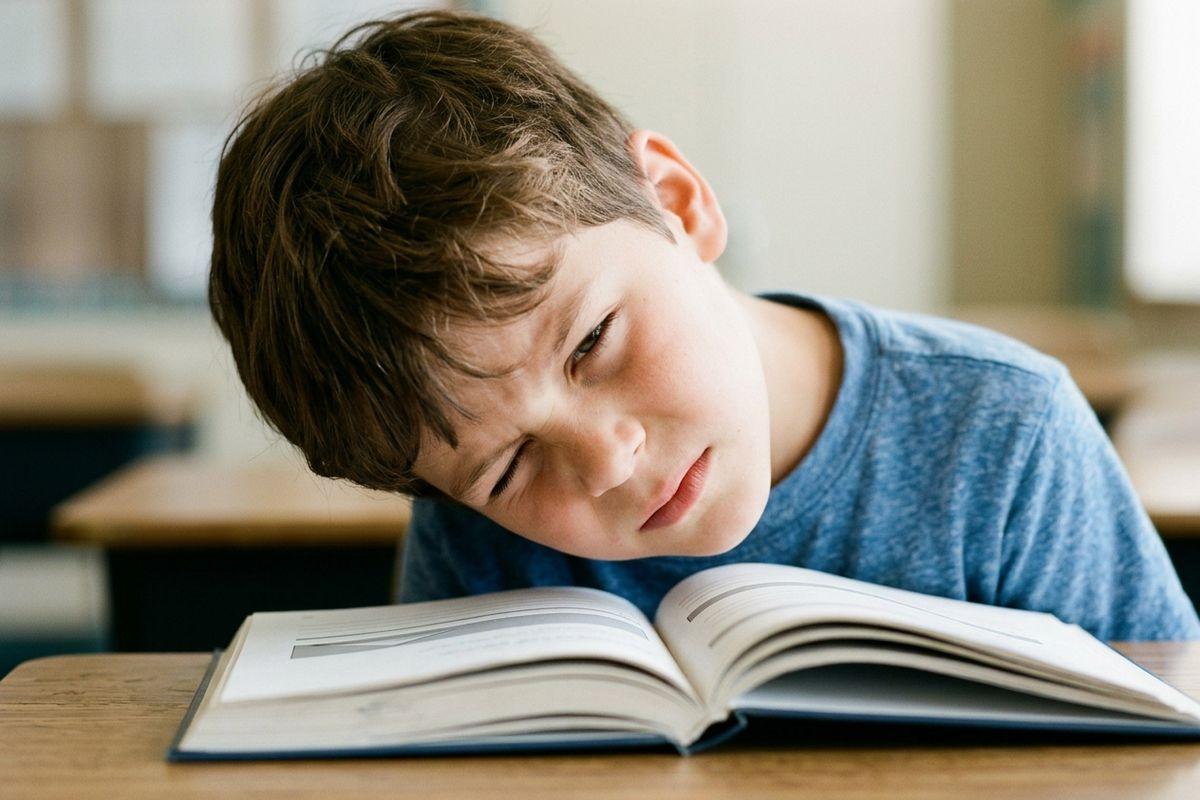
- Your child tilts or turns their head to one side.
- Your child squints at the board, the TV, or a book.
- Your child always has their hair over one eye.
Common Reasons Kids Close One Eye
Closing one eye usually points to one of a few things. An eye exam can help tell them apart.
Blurry Vision That Glasses Can Correct
Nearsightedness, farsightedness, and astigmatism can all make words look fuzzy. Squinting briefly sharpens a blurry image, so your child may do it without thinking.
This is the first thing to check with an eye exam.
Trouble with Eye Teamwork
Binocular vision is how both eyes work together as a team.
When that teamwork is off, the brain may get two mismatched images. Shutting one eye can ease the strain or double vision.
Lazy Eye or Eye Turn
Amblyopia, often called lazy eye, means one eye sees less clearly than the other, even with glasses. Strabismus means the eyes point in different directions. You might also notice a head tilt alongside either one.
Why 20/20 Vision Doesn’t Tell the Whole Story
A 20/20 result is good news, but it’s only part of the picture. A standard eye exam checks how clearly each eye sees. Eye teaming may need a separate, closer look.
This helps explain why some kids keep squinting after they get new glasses. If eye teaming is part of the picture, glasses alone may not change the habit.
How Eye Strain Can Affect Schoolwork
Eye strain doesn’t always look like an eye problem. At school and at home, it can show up in these ways:
- Your child loses their place, skips words, or rereads the same line.
- Their eyes get tired and their focus wanders during homework.
- They put in extra effort for the same visual result.
A 20-minute reading assignment can stretch into an hour of stops and starts.
When Should You Book a Vision Evaluation?
Squints in Bright Sun vs. Indoor Tasks
Squinting in bright sunlight is often normal. Plenty of people do it on a sunny afternoon at the ballpark.
Indoor or up-close squinting is different. It may signal strain. Some kids only do it when they’re tired, like at the end of a long school day. If the habit persists or shows up more often, it’s worth a closer look.
What Happens at a Functional Vision Evaluation
A functional vision evaluation looks beyond how clearly your child sees. During the visit, your eye doctor checks these areas:
- How well both eyes aim together.
- How the eyes team up during up-close work like reading.
The results guide the next steps for your child, so you know what to focus on.
Vision Therapy and Other Treatment Options
The plan for your child depends on what’s behind the habit. Some kids need one approach, and others do well with a mix of a few.
Options Matched to the Reason
Depending on the evaluation, options may include the following:
- Glasses can help with blurry vision.
- Tinted lenses can help with light sensitivity.
- Vision Therapy can help with a lazy eye.
How Vision Therapy Can Help
Vision therapy uses guided activities to strengthen how both eyes work together. Kids can often start as early as 1 year of age.
Progress varies from child to child. The goal is more comfortable reading, so homework time can feel less like a battle.
Next Steps for Your Family
A few simple steps can help you prepare for a visit:
- Note when and how often your child closes one eye.
- Share what teachers notice in class.
- Book a functional vision evaluation in Hattiesburg.
Prioritize Their Eyes
Our team at Belle Vue Specialty Eye Care takes time to listen to what you’ve seen at home and at school. If you’re looking into vision therapy in Hattiesburg, reach out to schedule a functional vision evaluation and learn more about what’s behind your child’s closed eye.


